
The FTC’s New Rules Means A Fake Review Could Cost You $51,744
On August 14, 2024 the Federal Trade Commission (FTC) issued new rules which crack down on fake, misleading, and AI-generated online reviews. The new rules, which take effect 60 days after the rules are published in the Federal Register, are designed to help protect consumers from fraudulent reviews as well as create an even playing field for businesses.
While most of the provisions within the new rules are the sort that no honest business would have violated, there are a few regulations among them which even well-intentioned businesses could run afoul of if they aren’t aware of them. Today we’re going to break down the new rules and help small business owners understand what it takes to stay on the FTC’s good side!

Understanding The Magnitude of the Fake Review Problem
Fake reviews are nothing new, but in recent years the issue has become somewhat dire. A study published in March 2024 found that 16% to 33% of online reviews were fraudulent. This presents a serious problem for consumers who increasingly rely on online reviews to make informed decisions and makes it more difficult for honest businesses to remain competitive.
While you could argue that the FTC should have taken action sooner, their deliberations on the subject began back in November 2022 and included regular follow-ups and requests for public commentary. The rules, while slow in coming, are quite expansive and promise to help curb the plague of fraudulent and deceptive reviews.
The FTC’s Rules Against Fake Reviews and Testimonials
The final version of the FTC’s rules against fake reviews have been published and will soon make their way to the Federal Register. Once on the Federal Register they will take effect within 60 days. The maximum penalty for violating any of these rules is $51,744 per violation.
Crackdown on Fake Reviews
This rule is as simple as it is needed. Essentially, businesses now can be fined for writing or selling fake reviews. What exactly is a fake review? Well, the FTC defines it as reviews which “misrepresent they are by someone who doesn’t exist or who didn’t have actual experience with the business or its products or services, or that misrepresent the reviewers’ experience.”
Put simply, if the review isn’t by a real customer talking about real experiences, it is a fake!

The final version of the FTC’s rules against fake reviews have been published and will soon make their way to the Federal Register. Once on the Federal Register they will take effect within 60 days. The maximum penalty for violating any of these rules is $51,744 per violation.
Crackdown on Fake Reviews
This rule is as simple as it is needed. Essentially, businesses now can be fined for writing or selling fake reviews. What exactly is a fake review? Well, the FTC defines it as reviews which “misrepresent they are by someone who doesn’t exist or who didn’t have actual experience with the business or its products or services, or that misrepresent the reviewers’ experience.”
Put simply, if the review isn’t by a real customer talking about real experiences, it is a fake!
Crackdown on Fake Testimonials
Customer testimonials have always been selected by businesses and thus err on the side of self-congratulatory. However, the new FTC regulations require that these testimonials be authentic and are prohibited from including fictitious content or “testimonials that make the same kinds of misrepresentations” as those prohibited in the rule on fake reviews.
Reviews aren’t for Sale
When this new rule comes into effect, it will be punishable to offer “compensation or other incentives contingent on the writing of consumer reviews expressing a particular sentiment, either positive or negative.”
Basically, telling customers that you will pay them for a good review (or a bad review for a competitor) is forbidden.
All “Insider” Reviews and Testimonials Need to Be Disclosed
While the last couple rules should be obvious – this regulation is one which well-intended business owners may run afoul of unintentionally.
Essentially any reviews posted by “employees, agents, or the immediate relatives of the officers, managers, employees, or agents” must appear with “clear disclosures.” Put simply, if someone who works for your business or is a family member of someone who works for your business writes a review, they must mention that connection.
We recommend that businesses take a careful look at their past reviews and make sure to add disclosures to reviews from family members or employees to avoid running into potentially serious fines.
No Claiming Company-Controlled Review Sites to Be Independent
This rule doesn’t affect most home service businesses, but is still important to be aware of. The rule states that “businesses are prohibited from misrepresenting that websites or entities they control or operate are providing independent reviews or opinions.”
No Illegal Suppression of Negative Reviews
Negative reviews can be hurtful and often feel baseless or unfounded. Accordingly, it isn’t unknown for business owners to lash out with “unfounded or groundless legal threats, physical threats, intimidation, or public false accusations.”
While we have never recommended this as a prudent course of action, doing so is now punishable by heavy fines.
As before, the best defense against a negative review is a bevy of good reviews. Now, more than ever, it is essential to have a robust review generation pipeline in place.
No Buying or Selling Social Media “Likes”
Google reviews may be the lifeblood of service businesses, but the FTC’s new rules recognize the growing importance of social media in business reputation. Accordingly, the new rules “[prohibit] the sale or distribution of fake indicators of social media influence, like fake followers or views.”
In this case the criterion for “fake” is narrowly defined as indicators coming from bots or hijacked accounts – so asking friends and family for a follow or like is still perfectly fine and honest business owners should have no problems following the FTC’s new guidelines.
No Specific Mention of Generative AI – But It’s Definitely Against the Rules!
The new rules don’t call out reviews written by generative AI, but the FTC’s announcements make it clear that these fall squarely within their sights. Any reviews or testimonials written by AI are by definition deceptive content and are prohibited.
Generative AI is a powerful tool – but the new rules make it clear that it can have no role in writing reviews for businesses.
What These Rules Mean for Small Businesses
The new rules are a welcome addition to the online review landscape and with robust enforcement should help prevent online reviews from becoming a cesspool of fakes which dilute customer trust.
The vast majority of the changes should not impact any business which has not bought fake reviews, and if anything will help scrupulous businesses compete against their competitors who rely on fraudulent reviews to artificially boost their online reputation.
It is important to note that the rule regarding disclosure of reviews by employees and family members does present a potential risk for honest businesses. Be sure to check for reviews which may have a conflict of interest and add disclosures to avoid future problems.
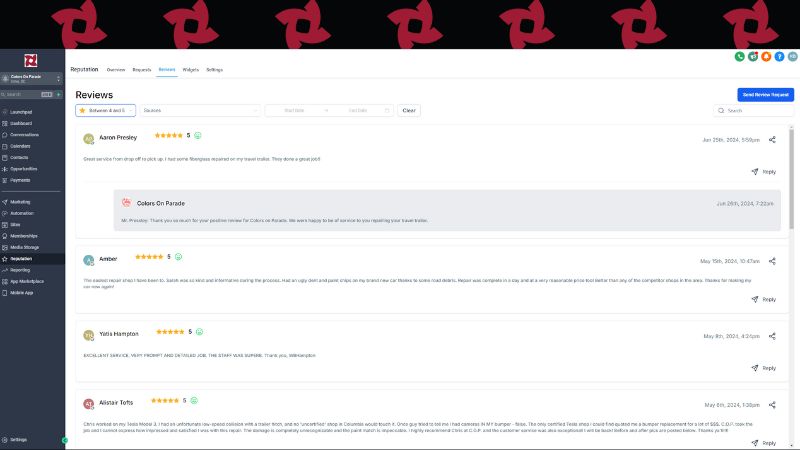
What has not changed is the importance of getting real customers to write real reviews. When done manually, this is a time consuming process – but thankfully there are powerful reputation management tools which make it easy for you to request reviews and address customer complaints before they make it onto Google.