
Forget Facebook Likes: How Local Search Delivers Real Customers
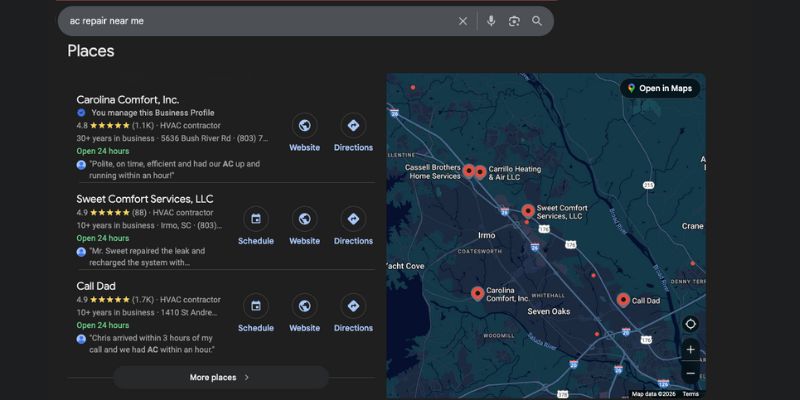
Picture this: A homeowner named Jane comes home on a sweltering July evening to find her AC has stopped blowing cold air. It’s 90°F inside and rising. Jane’s kids are crying, everyone’s sweating, and waiting isn’t an option. Does she open Instagram hoping to stumble on an HVAC contractor’s catchy post? Hell no. Jane grabs her phone and Googles “AC repair near me”. Within minutes, she’s on the phone with a local HVAC company that popped up at the top of Google, and a technician is dispatched for an emergency fix. Meanwhile, across town, an HVAC business owner is busy tinkering with a Facebook post about “summer energy-saving tips,” wondering why his trucks are sitting idle. This scenario plays out every day: when homeowners have urgent needs. A burst pipe, a smoking electrical panel, a furnace that won’t ignite- they turn to Google, not social media, to solve their problem. If your marketing strategy is obsessing over Facebook likes while your phones stay quiet, it’s time for a reality check.
Likes Won’t Keep Your Trucks Busy (Vanity vs. Reality)
Let’s cut to the chase: likes don’t equal leads. You can’t pay your technicians or keep the lights on with hearts and thumbs-ups. Yet many home service businesses fall into the vanity metric trap by chasing Facebook likes, Instagram follows, and post “reach” all while ignoring the metrics that actually matter. It’s an easy mistake, often encouraged by certain marketing agencies that love to show off a content calendar full of posts as “proof” they’re doing work. Sure, your Facebook page might get some likes from cousins and a couple of random locals, but did any of those translate into a paying customer this week? Be honest. The uncomfortable truth is that vanity metrics won’t keep your schedule full.
Likes, comments, shares – these are vanity metrics. They’re about popularity, not profitability. A post getting 50 likes might feel good, but if your crews are still parked and not out on jobs, those likes are meaningless. Contrast that with getting 50 calls from Google in a week. Even if your social media has zero buzz, your trucks would be on the move, and revenue would be coming in. We’ve seen businesses boast about a spike in Facebook followers while their monthly sales flatline. It’s time to stop the madness: focus on the metrics that create jobs and cash flow.
Quick gut-check: Would you rather have 100 likes on a post, or 10 inbound calls from customers ready to book? That’s what we call vanity vs. bankable metrics. The table is simple:
Vanity Metrics (Look Good, Do Little):
Facebook/Instagram likes, post views, new followers, “reach” and impressions. These make your marketing look busy.

Bankable Metrics (Drive $$):
Phone calls, contact form submissions, booked appointments, jobs completed, cost per lead, conversion rate, and revenue. These make your business busy.
At the end of the day, you can’t deposit likes at the bank. A thousand Facebook followers mean nothing if your phone isn’t ringing. Home service owners we work with care about booked jobs and profitable growth, not winning a popularity contest online. So let’s talk about where those real leads actually come from.
High Intent Wins: Why Search Beats Social for Local Services
When a homeowner is in pain (figuratively speaking) and needs help now, they act with intent. They search Google for an “emergency plumber near me” or “24-hour electrician near me.” They’re not casually browsing; they have a problem to solve ASAP. This is why search marketing dominates in home services: it captures existing demand. Someone with a flooded basement isn’t scrolling Facebook for fun because they’re laser-focused on finding a solution, and that solution is whoever shows up in search results, right at the moment they need it.
In marketing jargon, it’s demand capture vs. demand generation. Think of it like this:
Uptime Reliability
Demand Capture
(Google Search):
The customer already wants your service; they just need to find a provider. They have high intent. They search, see your HVAC or plumbing company in Google’s results, check your reviews, and call.
Marketing here is about being in the right place (Google’s first page, map pack, or ads) to capture that ready-to-book customer in the moment of need.
Demand Generation
(Social Media):
The customer isn’t actively looking for your service right now. You’re interrupting their scroll with an offer or content, hoping to spark interest. Social media is a slow burn, yes, it’s useful for keeping your name out there and planting seeds, but rarely does someone see a random post and immediately say, “I’ll book a $5K roof repair from this Facebook post!” Especially for emergency or urgent services, social media posts are background noise. You might build awareness or trust over time, but you’re not catching them at the exact moment they’re ready to hire.
For most home service businesses, search is the MVP of lead generation and social is a supporting player. Don’t just take our word for it: nearly all consumers – around 97% – use online search to find local businesses. And when they search, they mean business. That makes sense – if Jane’s searching “no heat in house” on a January night, she’s likely to hire a heating company within minutes. These are red-hot leads with wallets in hand.
Now compare that to social media: you might reach someone killing time on lunch break, not someone in immediate need of a plumber or electrician. It’s no surprise that data from BrightEdge shows that SEO drives over 1000% more traffic than organic social media on average (yes, 10x!). People head to Google when they want something done. Social media might get you some likes and occasional inquiries, but Google is the hotline for distressed homeowners. The intent and urgency behind search simply blow social out of the water when it comes to driving actual service calls.
Where the Money Is on Google
So how do you “be in the right place” on Google? It boils down to dominating a few key areas where homeowners are looking. Here’s the no-fluff breakdown of where the leads come from on Google and why each one matters:
Google Local Services Ads (LSAs – “Google Guaranteed”)
These are the ads at the very top of a local search, often with a little blue checkmark that says Google Verified. If Jane searches “emergency plumber near me”, she’ll likely see a couple of these at the top of her phone screen. Google Verified is a pay-per-lead ad for home services. You get charged per call or message, not per click, and Google builds trust by verifying your business through its screening process, which includes business document requirements and background checks. For you, this is low-hanging fruit – prime visibility, and you only pay for real leads. Many owners tell us that Verified ads bring some of the highest converting calls because customers see that “Google Verified and feel safe choosing you. If you’re not in that mix, your competitor down the road will be.

Google Ads (Search PPC)
Right below or alongside LSAs are the classic Google search ads (Pay-Per-Click text ads). These show up when someone searches specific keywords like “water heater leaking” or “rodent in attic exterminator”. You bid on keywords so that your ad appears at the top of results. Yes, it costs money – and some keywords in home services can get pricey (roofing or HVAC clicks can be $20, $30, even $50+ per click in competitive markets). But here’s the kicker: these ads put you front-and-center when a customer is actively searching for what you offer. It’s demand capture in action. You’re essentially paying for premium shelf space in Google’s store. Done right, the ROI is there because those clicks turn into leads and jobs. Tip: Use specific, urgent keywords (think “24-hour electrician” or “same-day AC repair”) and send them to a page that converts (more on that later). If managing Google Ads feels overwhelming, consider getting professional help on your Google Ads management – it’s one of those things where expertise pays off.

Google Business Profile (Map Pack SEO)
Ever notice that box of local business listings with a map and star ratings that shows up for searches like “pest control near me”? That’s the Google Map Pack, fed by Google Business Profiles (formerly Google My Business). Getting in the Map Pack is organically free meaning you don’t pay per click, but you have to earn it with good local SEO. It’s absolutely essential for any local home service. Why? Because many users, especially on mobile, go straight to those top 3 map results. If you’re a plumber in a city and not showing up in the map pack for “plumber [your city]”, you’re invisible to a huge chunk of your market. Optimizing your Google Business Profile (GBP) with correct categories, a keyword-rich description, lots of photos of your work, and plenty of customer reviews will boost your chances of ranking here. The reward? More calls and clicks for free. In fact, businesses with a complete GBP get up to 7x more clicks than those without. Bottom line: Own your GBP and local SEO. (Need tips? Check out our guide on how to optimize your Google Business Profile for a step-by-step.)

Organic SEO (Your Website in Classic Search Results)
Just below the ads and map pack lie the regular organic search results – this is where your website’s SEO comes into play. If someone searches “furnace repair near me” or asks Google “why is my heater making loud noise”, you want your website content to appear on page one. Ranking organically is a longer game (it can take months to climb), but the payoff can be huge and lasting. Great content targeting homeowner questions (e.g., blog posts answering “No heat in house – what to check?”) can pull in visitors who then call you. And your service pages, optimized for local keywords (“air conditioning repair in [Town]”), can rank and bring in a steady stream of leads without you paying per click. Remember that stat: SEO drives 10x more traffic than social media. When you invest in organic SEO – quality content, local keywords, backlinks, fast site – you’re building an asset that keeps generating leads over time. It’s not instant like ads, but it’s undeniably powerful for long-term lead flow. Pro tip: Pair your SEO with a conversion-focused website (more on that soon) so that when they do land on your site, it’s a quick path to contact you.
The common theme across all these Google channels? They catch people who are looking right now for what you offer. Whether it’s through a paid ad, the map pack, or an organic listing, you’re meeting an existing demand. In our experience, that means higher conversion rates. For example, industry data shows 40% of home services consumers who call from a search ad or listing end up booking the service. These are warm leads. On social media, by contrast, you might have to nurture someone for months before they need you, if they even remember you at all when that day comes.

The Right Way to Use Social Media (Without Fooling Yourself)
Let’s be clear: we’re not telling you to delete your Facebook page or stop posting entirely. Social media absolutely has its place – it’s just not your primary lead engine. So what’s the right way to use it? Think of social as a credibility and branding tool, not a direct booking channel. Here are smart ways home service companies use social media without kidding themselves:
Showcase Your Work and Happy Customers:
Use Facebook and Instagram to post before-and-after photos, short project videos, and testimonials. When a potential client checks your page, seeing a feed of recent bathroom remodel transformations or a video of a happy homeowner raving about your team builds trust. It’s social proof and a portfolio rolled into one. It won’t flood you with new leads overnight, but it will make warm prospects more comfortable choosing you.
Highlight Your Team and Culture:
Got a photo of your crew rescuing a kitten from an HVAC duct, or a tech receiving an anniversary award? Post it. Homeowners like to hire real humans they feel they know. Showing the faces behind the company, the team in uniforms, the truck fleet ready to roll, and your staff volunteering locally can humanize your brand. It reinforces that you’re a local, trustworthy business, not a faceless entity. This can tip the scales when someone’s comparing you with a competitor.
Stay Top-of-Mind with Past Customers (Retargeting):
Social shines for retargeting ads. Ever looked at a product online and then it “follows” you with ads on Facebook? You can do that too, affordably. When someone visits your website (say to read about your water damage restoration service) but doesn’t call, you can have an ad chase them on Facebook/Instagram later: “Got water damage? We’re ready 24/7 to help.” This isn’t cold outreach, it’s a reminder to someone who already showed interest. Those often convert well, because the intent was there; they just needed a nudge or happened to get distracted the first time.
Engage Your Community & Solicit Referrals:
Use platforms like Facebook or Nextdoor more like a community bulletin board. Post helpful seasonal tips (“Here’s how to prep your AC for summer”), sponsor local little league teams and share it, or ask happy customers to recommend you on community groups. This isn’t about instant leads, it’s about word-of-mouth amplification. One satisfied client singing your praises in a Facebook neighborhood group can be gold.
Recruiting and Internal Culture:
Hiring technicians or office staff? Posting job openings or company culture snippets on social can help attract talent. Many of our clients have found great hires because they showcased an apprenticeship program or fun team outing on their socials. This indirectly helps your business grow (more crews = more revenue capacity).
What not to do? Don’t burn hours “posting daily” with zero strategy. Don’t measure success by how many people saw your funny plumbing meme. And definitely don’t rely on social as your main lead source, because you will go hungry. Social media is the long game: nurturing your brand presence, supporting SEO (yes, active socials can add a little SEO credibility), and building trust. It’s not the phone-ringing engine. So allocate your time and budget accordingly: first dominate search, then maintain a respectable social presence (as a trust signal, not a primary funnel).
Build a Search-First Marketing Plan for Real Leads
Enough theory, let’s talk action. If you’re convinced that Google is where your customers are, what should you actually do about it? Here’s a no-BS, search-first marketing plan for a typical home service business owner. Focus on these steps to turn that search advantage into real leads and booked jobs:
1. Make Your Website a Conversion Machine:
Your website isn’t a digital brochure – it’s a sales rep that works 24/7. Design every page with a clear call-to-action. That means prominent “Call Now” buttons, a tap-to-call phone number at the top (use call tracking to know where leads come from), easy web forms, and live chat/text options if possible. Ensure the site loads fast (slow sites lose impatient customers) and looks great on mobile, since over half of local seekers are on phones. Every visitor from Google should instantly know how to contact you and feel confident doing so. (Need ideas? See our guide on building a conversion-focused website for home services.)

2. Fully Optimize Your Google Business Profile:
This is your new homepage on Google. Fill out every section of your GBP thoroughly – correct business categories, a detailed description with local keywords, service areas, and hours (especially emergency service availability if you offer it). Upload tons of photos (your team, trucks, jobs, before-and-afters). Regularly post updates or offers. Most importantly, collect reviews like your business depends on it – because it does. Recent reviews with high ratings will push you up in the map rankings and make you the obvious choice. Make it a habit to ask every happy customer for a Google review. It’s marketing gold that costs you nothing but a simple request. (For a deeper dive, read our full guide on how to Optimize your Google Business Profile and our Master Your Local Market checklist.)

3. Implement a Review Generation System:
Don’t leave reviews to chance. Set up a simple system- it could be as easy as an automated text/email to customers after each job, linking them to your Google review page. There are tools (some CRMs, or our own software solutions) that make this one-click simple for the customer. The goal is a steady stream of fresh 5-star reviews. Not only do reviews influence Google rankings, but they also directly impact conversion: a homeowner will choose an HVAC company with 200 reviews at 4.8★ over one with 5 reviews at 5.0★, every time. Social proof and SEO benefit in one punch. Make reviews part of your team’s DNA.

4. Turn on Paid Search to Capture Leads Immediately:
While your SEO and map rankings build up, invest in Google Ads and Local Services Ads to keep your pipeline full. Google Ads (search PPC) lets you bid on the hottest keywords (e.g. “emergency electrician,” “weekend plumber near me”) so you show up every time, right when a job is ripe. Yes, you pay per click, but if your website and phones convert those clicks to paying jobs, the math will work out. Local Services Ads are a no-brainer if you qualify; you pay per lead and get that Google Guaranteed badge. Many owners see LSAs deliver some of their lowest cost-per-lead among paid channels. The beauty of paid search is that you can dial it up or down based on your schedule – slow season? Increase ad budget and fill more jobs. Too busy? Pause or reduce spend. It’s like a faucet for leads. Just be sure to track every call and form fill so you know your ROI (more on tracking next).

5. Track Everything (Marketing Analytics 101):
You can’t improve what you don’t measure. Set up call tracking numbers for each channel (one for Google Ads, one for LSAs, one for your website SEO traffic, etc.) so you know where the calls are coming from. Use Google Analytics or a marketing dashboard to see how many leads convert to customers and what your cost per lead is for each channel. This is the stuff that serious business owners pay attention to. If you see, for example, that last month you got 30 calls from organic search, 15 from Google Ads, and 2 from Facebook, you can make data-driven decisions on where to put your next dollar. Tracking and analytics might sound geeky, but it’s directly tied to your bottom line. (Our clients get a clear report each month. If your current marketing partner isn’t giving you that transparency, demand it.) The goal is to zero in on the tactics that bring profitable leads and cut out the dead weight.

6. (Optional) Use a Unified Inbox/CRM to Respond Fast:
Here’s a secret growth killer: slow response time. When that hot lead comes in, whether it’s a call, form, text, or Facebook message, you need to answer fast. Homeowners in a crisis will call the next company if you don’t pick up or respond within minutes. Consider using a unified inbox CRM that pulls all your leads from all sources into one app. Your office staff (or you, if you’re owner/operator) can see every new inquiry in one place and respond immediately, without juggling five platforms. Even missed calls can trigger an automatic text back saying “Sorry we missed you, how can we help?” Speed wins jobs. A good CRM also helps you track follow-ups so no lead slips through the cracks. It’s an optional step, but if you’re growing and getting leads from multiple channels, it’s a game-changer for efficiency and making sure your hard-won leads turn into booked jobs.
By following this search-first plan, you’re covering the bases that actually drive revenue. It’s not theory – it’s exactly what thriving home service companies are doing right now to dominate their local markets. And notice, none of these steps involved posting dancing TikToks or chasing viral memes. We’re talking direct ROI tactics here.

The Bottom Line: Leads Over Likes, Every Time
At the end of the day, you have a choice in where to focus your marketing energy. You can chase vanity metrics and hope popularity somehow pays the bills… or you can zero in on the channels that bring in ready-to-buy customers. When the heat is on (literally, in Jane’s case with the broken AC), the company winning the job is the one that showed up on Google – not the one with the funniest Facebook post that week.
If you want applause, chase likes. If you want jobs, dominate search. Focus your efforts on being visible where it counts, in Google search results, and watch your schedule fill up. Social media can play a supporting role in reinforcing your brand, but it’s Google that gets your phone ringing when it matters most.
So ask yourself as a home service business owner: do I want to feel good, or do I want to do good business? The answer is easy when you put it like that. It’s time to double down on what works. If your gut’s telling you your marketing mix is off (too much fluff, not enough results), you’re probably right. Cut the fluff.
What to do next? Take a hard look at where your leads came from last month. If you’re like most, the majority came through Google in some form. Build on that. Tighten up your website, polish your Google Business Profile, invest in SEO content, and turn on those Google Ads with a smart strategy. And if you need a partner who doesn’t spew corporate nonsense and is obsessed with results, we’ve got your back. At Cut Throat Marketing, we live by this “search-first” approach – we help home service companies get actual, bankable leads. No vanity B.S., just tactics that fill your dispatch board.
Ready to trade vanity for victory? Let’s talk. We’ll audit where you’re at, show you how to outshine competitors on Google, and craft a plan to keep your techs busy and your trucks rolling. Don’t waste another dollar on feel-good marketing that doesn’t convert. Prioritize what works and watch your business grow.